A guided walk-through of the MAI-Alchemy workspace. Pick a standard, then click the view tiles to explore how one LUMA run could become identity, structure, and physical properties. Early, exploratory work — the concept, not a finished product.
GUIDED SIMULATION · REAL ALCHEMY OUTPUTS · PATENT PENDING
MAI-Alchemy · Chromatography Data System
📈Peak View
🏔Stark View
⛰3D Peak
🧬Deconvolution
📚Library & Match
Peak View — hover to discover
The live chromatogram for the selected standard. Move your cursor over any peak to see the VUV spectral fingerprint and physical properties the concept aims to surface — the idea we're exploring.
—
—
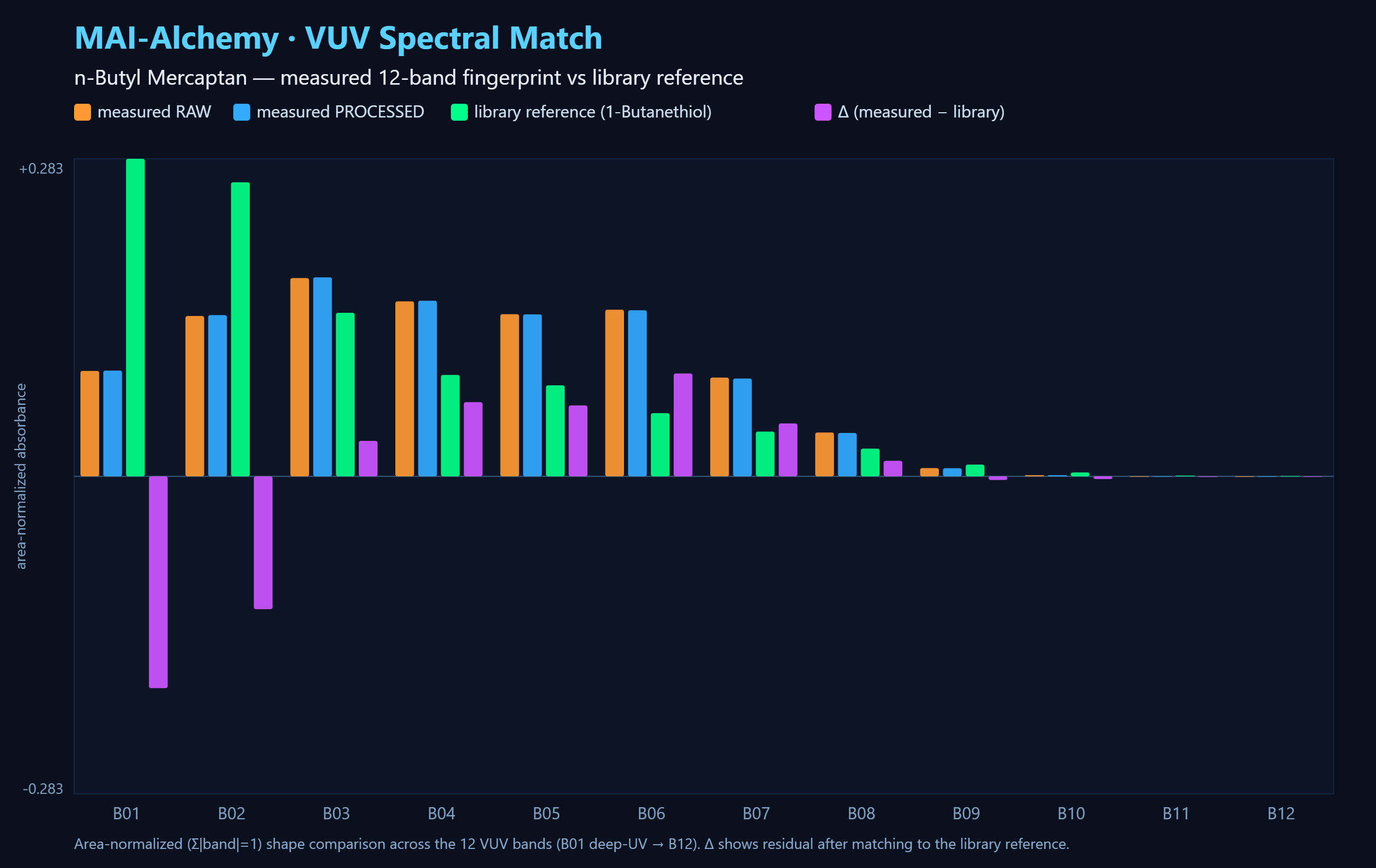
Every peak carries its own 12-band fingerprint. Hover across the trace to see them change.
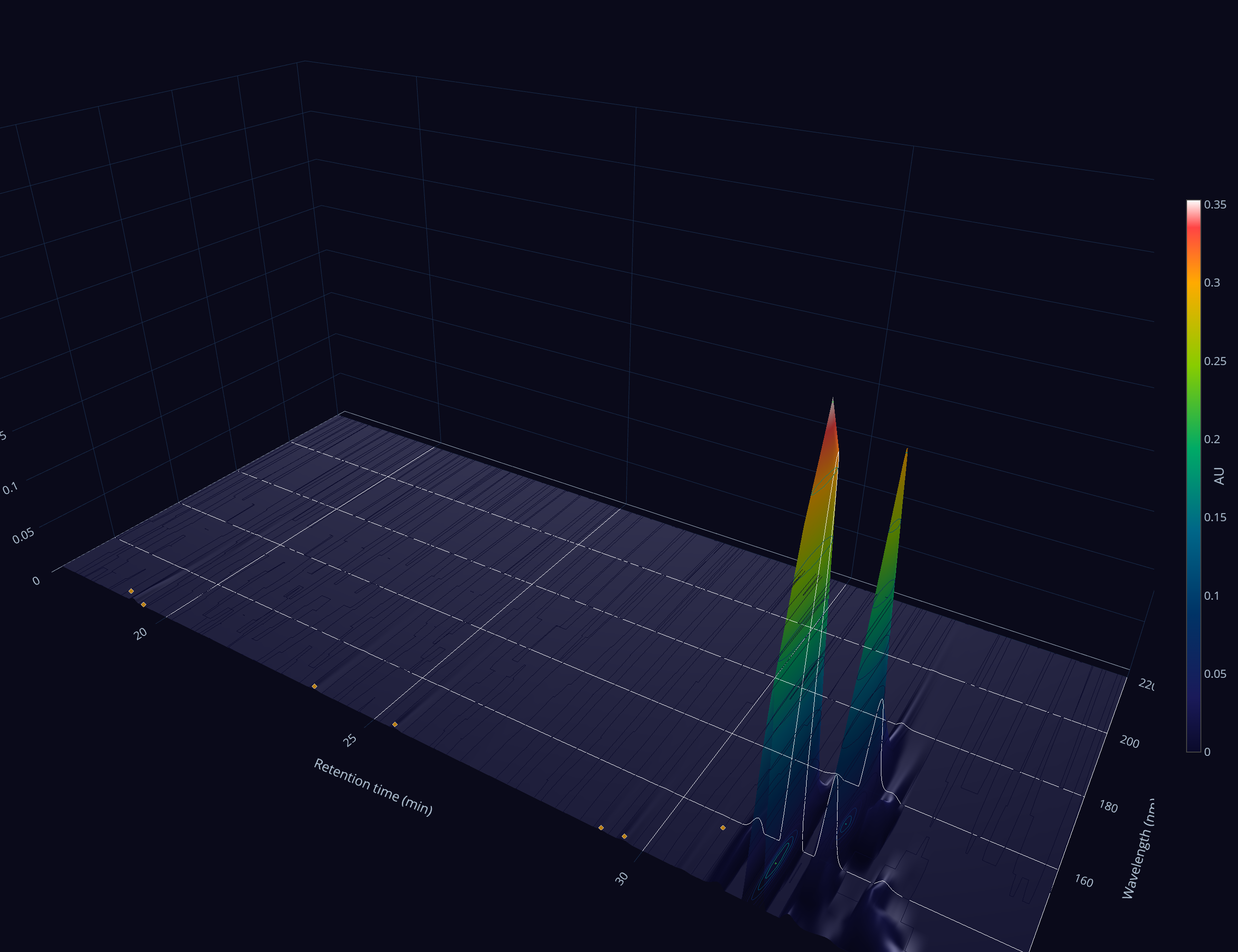
Stark View — the whole sample at once
Every wavelength × every retention time in a single surface. Coelutions and spectral shifts that hide in a 2D trace can stand out far more readily.
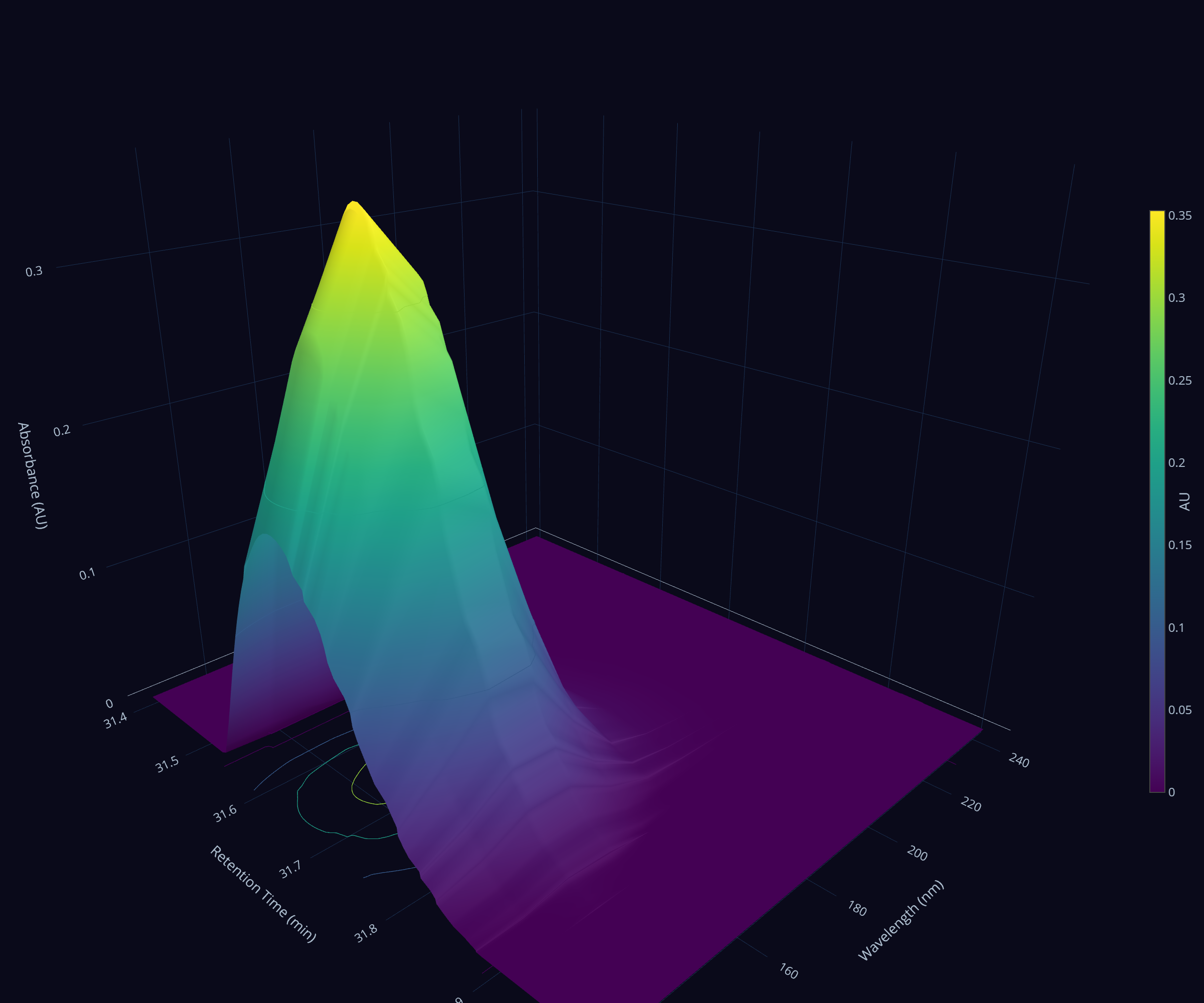
3D Peaks — time × wavelength × absorbance
Each peak rendered as a full spectral surface. Shoulders, coelutions and saturation can become far easier to see in three dimensions.
Deconvolution — click a peak, explore the components
The idea: click any peak in the chromatogram and Alchemy attempts to pull apart co-eluting species — showing how the spectrum migrates across the peak and the components that may hide underneath. Where two co-eluters are spectral twins, the split is flagged uncertain rather than guessed. An early, exploratory direction. Patent pending.
🧬
Live capture dropping in
This panel will show the peak-click deconvolution + spectral-migration view from the Alchemy workspace — an attempt to resolve a single peak into its underlying components. Final screenshot being added.
Library & Matching — beyond a single cosine score
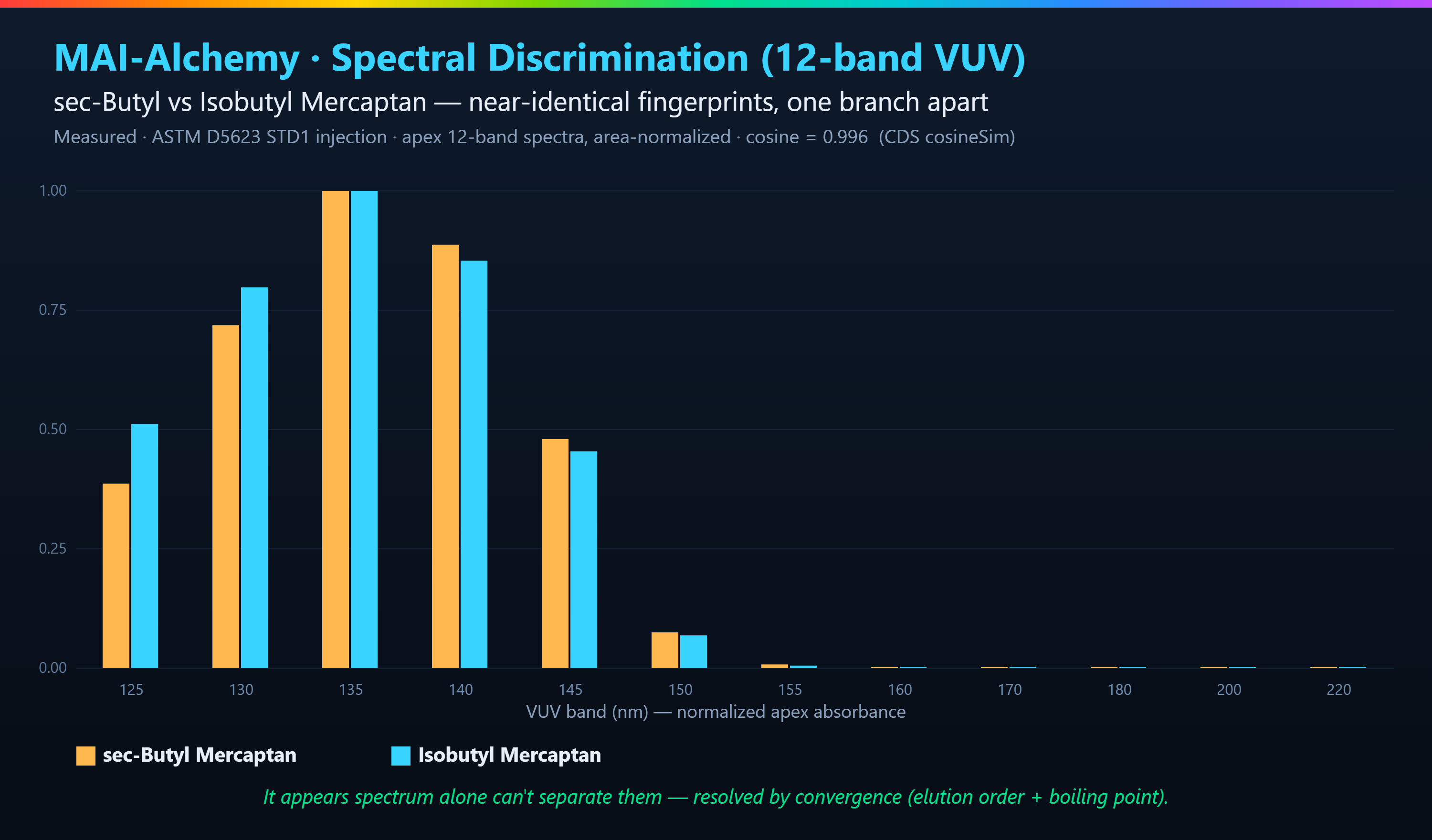
Look-alike spectra a single cosine score calls over 99% identical are where we're exploring whether physics can decide instead. Switch between the matching techniques:
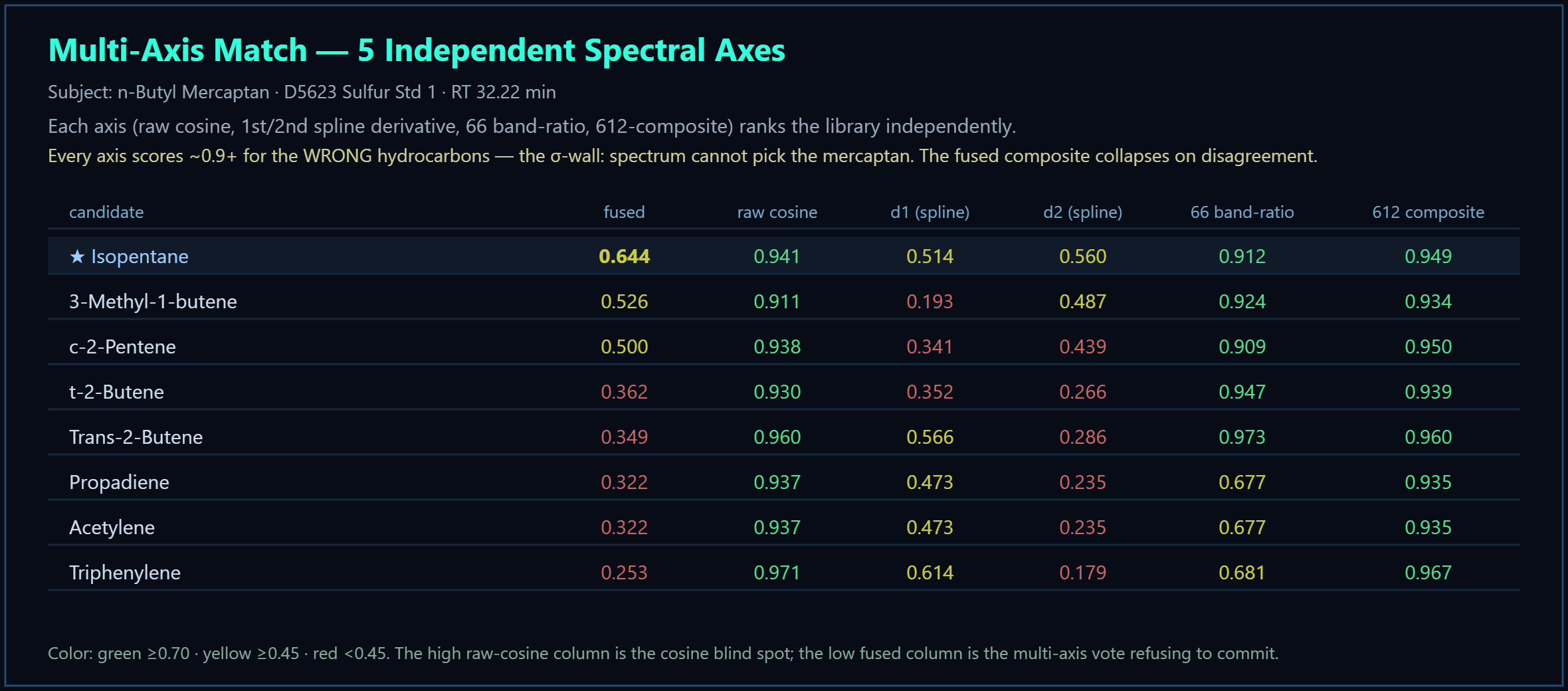
Multi-axis match
Spectral (cosine)
σ-wall discrimination
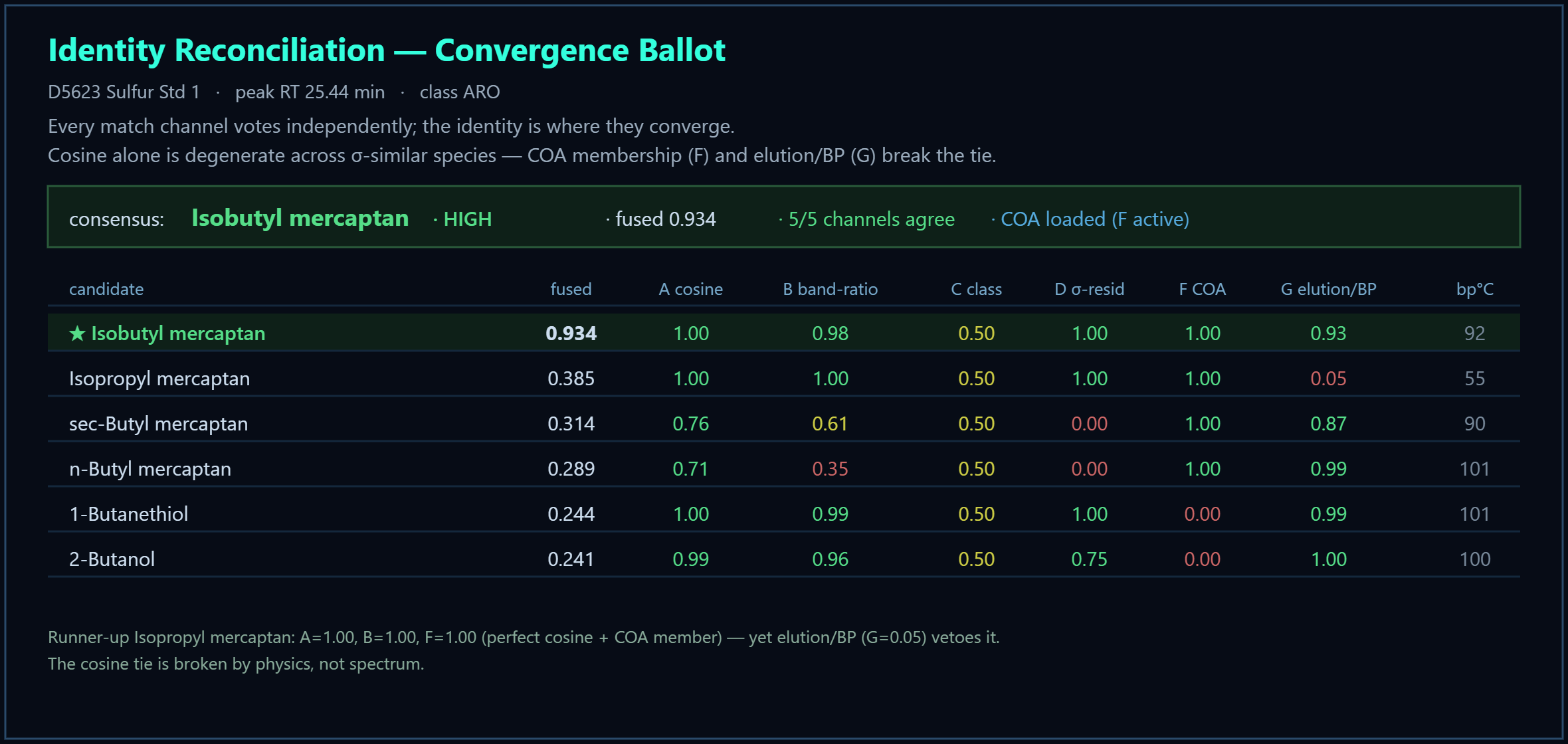
Convergence ballot
Five axes vote
The approach we're exploring: spectrum is just one of five independent axes — band ratios, elution order, boiling point and response factor could each cast a vote, with the identity standing only where the axes agree.
Where cosine alone fails
Cosine saturates near 1.0 for structurally-similar species — it lies about certainty. It is a first pass, never the verdict.
Walking around the σ-wall
Saturated species sit behind a wall of spectral degeneracy — the σ-wall doesn't move. The potential is in going around it: whether band-ratio rulers and elution-anchored boiling point can tell apart what spectra cannot.
Consensus, audited
The design goal: every channel's ballot shown side by side, so you can see why an identity was proposed — not just a number handed down.
This is a guided simulation using representative outputs — the working prototype runs on live instrument data. Curious what it sees in your data? →